
On the morning of July 20, 2026, a presentation report on the 2026 Mould Shanghai Cup "AI-Native · Code Evolution" Youth AI Programming Competition was delivered at the World Artificial Intelligence Conference (WAIC). Spanning two months across four tournament rounds, the competition came to a successful full conclusion.
During the final stage prior to the showcase, 12 student teams consisting of primary and secondary school participants delivered on-site roadshows of their self-developed software works on July 3. Rooted in students’ observations of practical challenges in daily life and academic study, these works translated conceived solutions into functional software via AI programming.
Guided by the Shanghai Municipal Commission of Economy and Informatization and Shanghai Municipal Education Commission, the competition was hosted by the Shanghai Artificial Intelligence Industry Association, the College of Teacher Education, and the Science, Technology and Arts Education Center. It was co-organized by Stanford Angels & Entrepreneurs China, Liva Information Technology (Shanghai) Co., Ltd., and SAIFS Research Center and Innovation Center, ECNU.
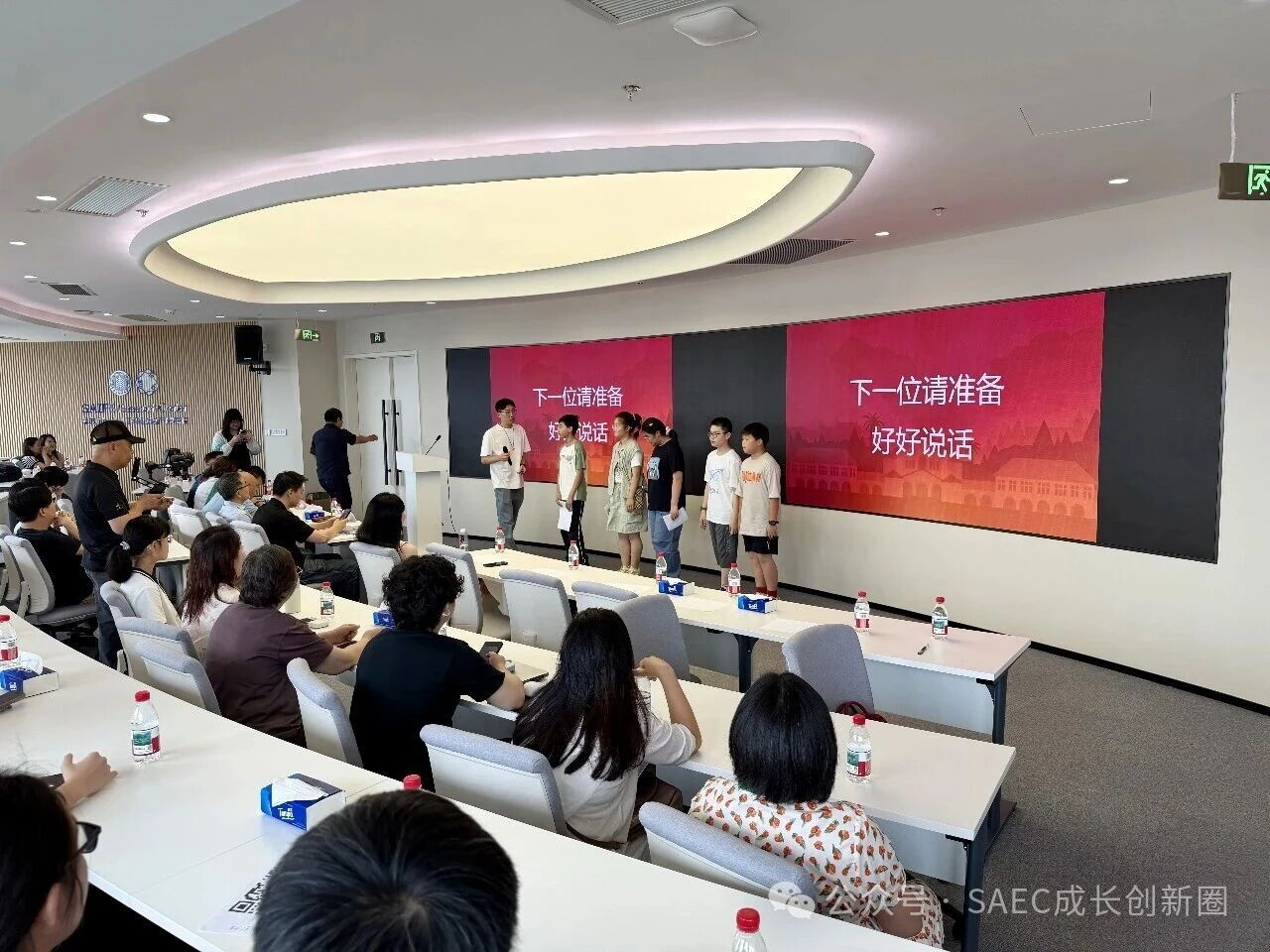
The final roadshows were held at SAIFS Research Center and Innovation Center,ECNU
I. The Door to Software Opens to All: Competition Centered on Vision and Creativity
Over the past six months, the artificial intelligence industry has witnessed another landmark breakthrough marked by drastically upgraded AI programming capabilities. Individuals need no prior coding proficiency; so long as users clearly articulate their intended functions and targeted problems to resolve, AI can automatically generate corresponding code. As Dr. Jensen Huang, CEO of NVIDIA, put it, natural language is evolving into the programming language of the AI era. Bolstered by heavy capital investment and widespread industrial backing, AI programming has become a strategic focal point of global technological competition.
Software acts as a universal tool for information processing and logical implementation. Its drastically lowered technical threshold unlocks opportunities far beyond software development alone, extending to nearly all relevant scenarios. Software creation was once exclusive to professional programmers, yet this barrier has fallen open to all participants, including middle and primary school students.
Distinct from conventional programming contests focused on solving exam-style coding problems, this competition evaluates complete functional works rather than algorithm exercises. With coding no longer a limiting entry requirement, two qualities grow exceptionally scarce in the AI age:vision—the capacity to identify overlooked practical real-life challenges—and creativity—the ability to devise unprecedented solutions. The competition is designed to cultivate these two core competencies essential for students navigating the AI era.
-Registration & Preliminary Screening: Participants submit written descriptions of their creative concepts.
-Preliminary Round: Contestants deliver three-minute video presentations elaborating on project concepts, application value and innovative highlights.
-Semi-final Round: Teams build functional product prototypes, conduct iterative optimizations based on feedback, and submit upgraded works for the final round.
-In-person Final Session: Modeled after Silicon Valley incubator Demo Day roadshows; contestants deliver stage presentations and respond to judges’ on-site questions.
Powered by AI programming that drastically compresses software development cycles, the competition enables young participants to complete the entire zero-to-one product development workflow within two months. All submitted software projects are published on the official contest website for public trial use and open voting. This arrangement serves more than publicity and exhibition; it exposes every student work directly to end users to gather real-world feedback and undergo practical validation.
Twelve projects qualified for the final round following comprehensive scoring by expert judges and reference to public online voting results.
III. Highlighted Final Works
The twelve finalist projects cover diversified practical scenarios:
-Mobility assistance for visually impaired people: a running companion platform for the blind;
-Traditional cultural communication: AI Ancient Poetry Map System and I Ching Visualization tools helping young people learn traditional culture engagingly;
-Adolescent mental wellness: Teen Mental Fitness Hub and Friendly Communication Assistant;
-Edutainment tools for school learning: AI Error Elimination Match Game and Wenqu Miao AI Learning Assistant;
-Pet emotion interpretation: Cat Language Translator;and numerous other innovative creations.
During the final event, contestants demonstrated and explained their projects on-site. Judges raised targeted questions continuously, while participants responded calmly and thoroughly. The venue maintained an intense yet vibrant atmosphere, with students’ creative ideas repeatedly impressing all attendees.
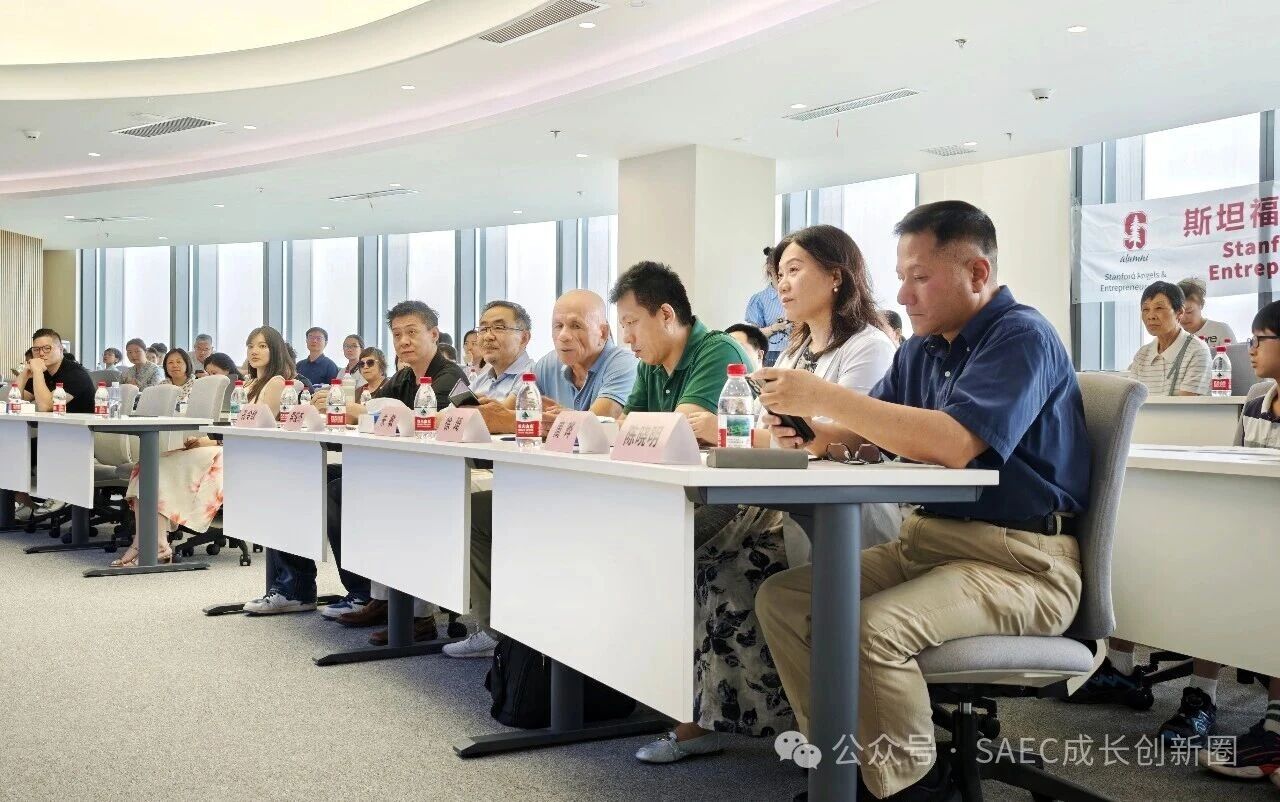
Judges Panel of the Final Competition
The judging panel included Mr. Min Zhu, founder of WebEx and Chairman of Cybernaut Investment Group (WebEx was acquired by Cisco for USD 3.2 billion); Mr. Qi Xu, Deputy Secretary-General of the Shanghai Artificial Intelligence Industry Association; Mr. Lingxin Kong, former CEO of Shell Finance; Mr. Xiaoming Chen, Founder and Managing Director of Sanyou Asset Management; Ms. Ye Zhou, Assistant Principal of Wenlai Middle School; and Dr. Junjie Li, Chairperson of Stanford Angels & Entrepreneurs China.
Instead of focusing on neat or sophisticated coding, the judges attached importance to multiple dimensions: whether the project solves genuine practical problems, whether unique insight and creativity are reflected, as well as product maturity, market potential and social value.
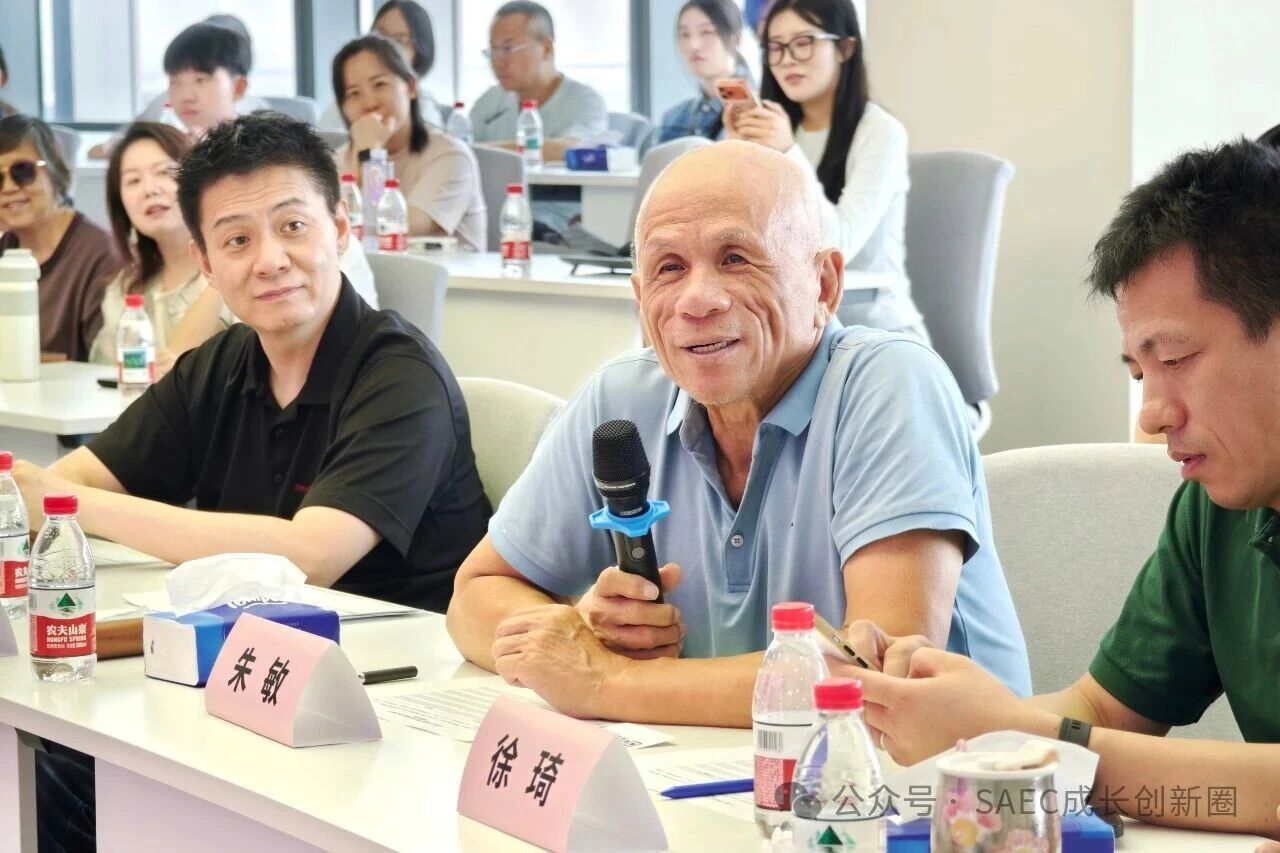
Judges’ Comments and Q&A Session
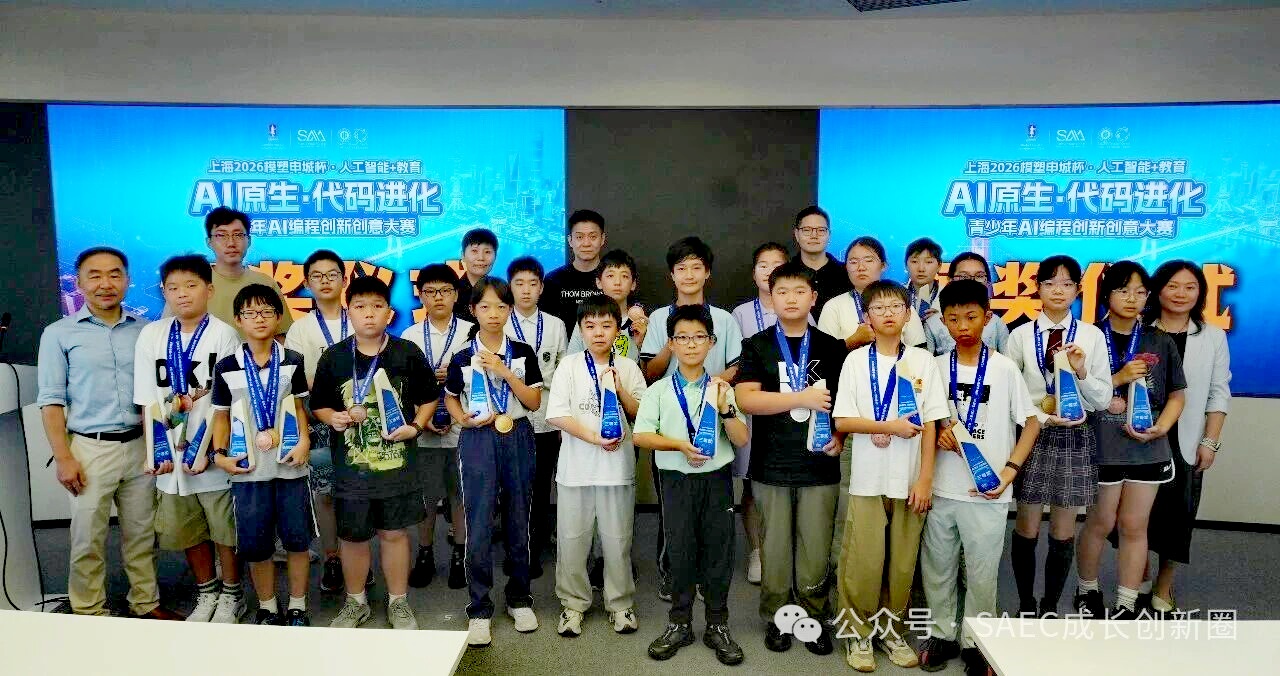
Two projects were awarded the First Prize, four the Second Prize and six the Third Prize in this competition. The AI Ancient Poetry Map System and the Running Companion Platform for the Blind claimed the First Prize. The full list of award winners is attached at the end of this document.
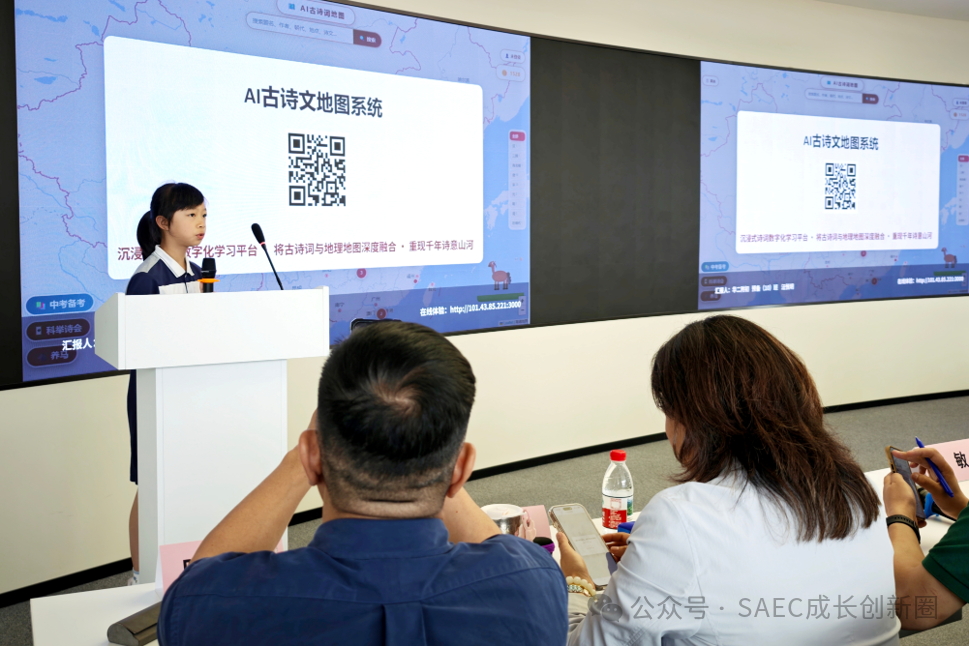
Roadshow Site of the AI Ancient Poetry Map System
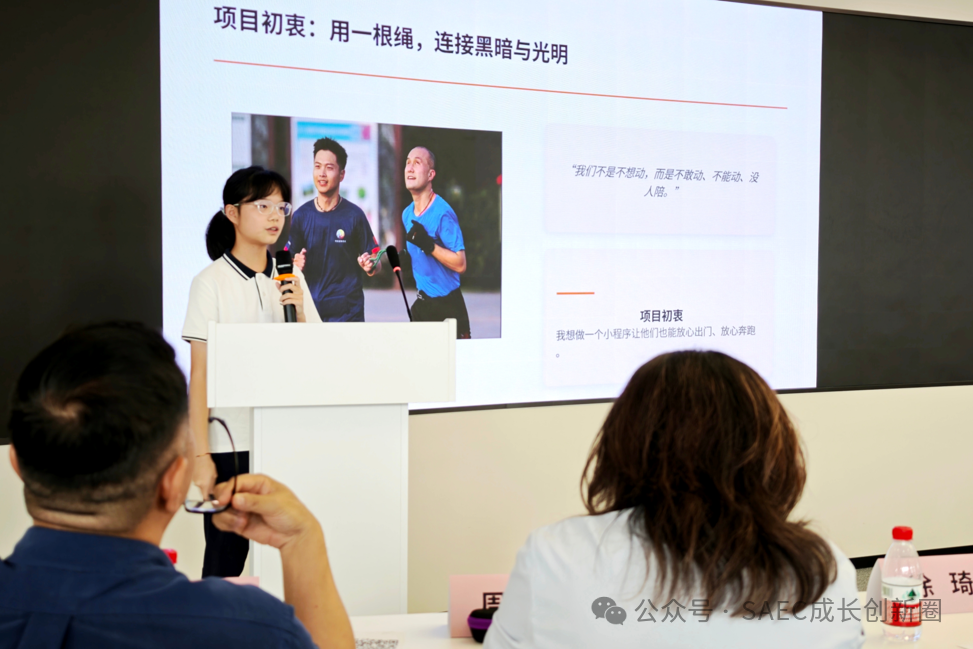
Roadshow Site of the Running Companion Platform for the Blind
IV. Competition Promoters
The successful organization of this competition owes much to the vigorous promotion of the two co-organizers.One co-organizer is Stanford Angels & Entrepreneurs China, abbreviated as SAEC. It serves as the Chinese affiliate of Stanford Angels & Entrepreneurs, a global alumni network of Stanford University focusing on innovation, entrepreneurship and early-stage investment. Integrating core Silicon Valley resources and cutting-edge technological insights, this organization supports China’s innovation and entrepreneurship ecosystem.
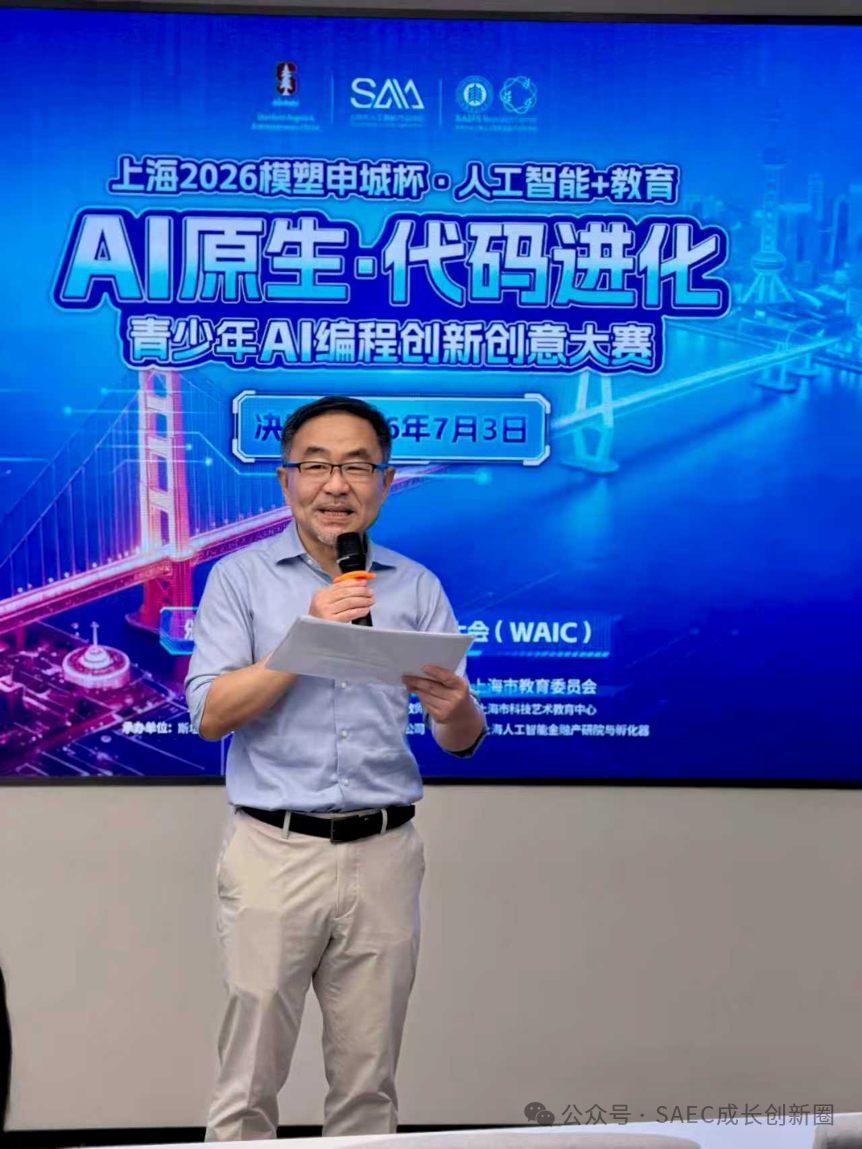
Dr. Junjie Li Announced Competition Results
Stanford Angels & Entrepreneurs China has observed recent breakthroughs in AI programming and recognized the profound implications of such progress for adolescent education and long-term youth development, thus conceiving and facilitating this competition. The overall competition framework — ranging from written concept elaboration and video storytelling to software prototyping and in-person roadshows — originates from its in-depth comprehension of how entrepreneurial projects evolve from initial concepts into tangible products.
The other co-organizer is SAIFS Research Center and Innovation Center, ECNU. As an authoritative academic institution in education, East China Normal University’s research center brings together top professionals specializing in artificial intelligence and fintech. It commits itself to integrating academic research with industrial applications as well as incubating and nurturing early-stage ventures. Outstanding projects emerging from the competition may secure access to resources and follow-up support for further advancement at the center.
V. The Inaugural Event, Merely a Starting Point
After the competition concludes, award-winning projects will not be put aside. Participants may continue maintaining, iterating and even officially launching their works. These projects can evolve into continuously updated portfolios documenting each student’s observations and creations, enabling contestants to demonstrate their insight, creativity and execution capability for future college admission and career applications.
Today’s middle and primary school students belong to the first generation of AI natives. Growing up using artificial intelligence to raise questions, gather information and tackle problems, they find it intuitive to translate ideas into functional works with AI tools. Identifying real-world challenges and materializing ideas are core competencies for young people, and this competition simply offers them a stage to showcase their abilities.
This marks the inaugural edition of the contest, with preparations for the second round already underway. Attention and participation from all parties are warmly welcomed.
VI. List of Competition Awardees
2026模塑申城杯"AI原生·代码进化"青少年 AI 编程大赛获奖名单:List of Winners, 2026 Mould Shanghai Cup "AI-Native · Code Evolution" Youth AI Programming Competition
First Prize (2 Entries)
1、AI Ancient Poetry Map System – Yueyue Wang, Junior High School Affiliated to No. 2 High School of East China Normal University
2、Running Companion Platform for the Blind – Qianyi Gao, Shanghai Xiehe Bilingual Shangyin School
Second Prize (4 Entries)
1、Teen Mental Fitness Hub – Shouyi He, Tianjin Xinhua Shenggong School
2、Biotrack – Xitong Yu, International Division of Shanghai High School
3、Cat Language Translator – Chenhan Li, Boran Zhang, Qingpu Xiehe Bilingual School
4、Smart Vault – Shangxuan Dai, Yangpu Bilingual School
Third Prize (6 Entries)
1、I Ching Visualization – Minyuan Ma, Hopkins School, International Division of Wenqi Middle School
2、Wenqu Miao AI Learning Assistant – Jiachen Song, Qingpu Xiehe Bilingual School
3、Zero-Clear Project: AI Error Elimination Match Game – Yancheng Li, Wenchong Xu, Junior High School Affiliated to No. 2 High School of East China Normal University
4、My Study Buddy – Qingyuan Zhao, Junior Division of Wenlai Middle School
5、ToneMate Scale Partner
- Jietong Tong, Jianxiang Primary School
- Zhenxiang Tang, Xinan Weiyu Middle School
- Caishan Sun, New Epoch Bilingual School
- Zhengtao Yao, Minhang District Experimental Primary School
- Chenyu Zhou, Shanghai World Foreign Language Middle School
Most Popular Award (1 Entry)
Zero-Clear Project: AI Error Elimination Match Game – Yancheng Li, Wenchong Xu, Junior High School Affiliated to No. 2 High School of East China Normal University
Official Competition Website: https://www.saec.org.cn/airace/#/arena
We welcome your attention and participation!
Source:Stanford Angels & Entrepreneurs China, SAIFS Research Center and Innovation Center, ECNU