
At 16:00 on April 25, 2026, Stanford Angels & Entrepreneurs China, Princeton University Shanghai Alumni Association and Shanghai AI-Finance School (SAIFS), East China Normal University co-hosted the latest Stanford Entrepreneurship Lecture. Focusing on the application scenarios and practical experience of Agents and OpenClaw, the event attracted registration from a large number of alumni, entrepreneurs and investors. Sixing AI Community was the co-organizer of this activity.
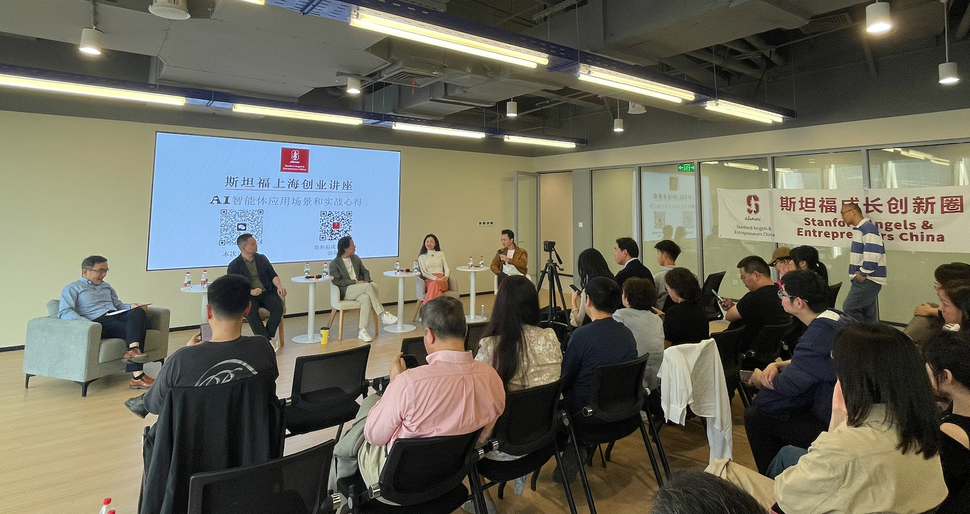
Lecture Scene
During the lecture, Dr. Junjie Li served as the host. Four guests, namely Mr. Weixiao Fan CC, Professor Yilei Shao, Mr. Dongdong Wei and Mr. Ruiyang Xu, carried out in-depth discussions and sharing. The discussion covered the development status, prospects and global landscape of AI Agents, application scenarios and practical experience of AI Agent implementation, as well as entrepreneurial and investment opportunities in the AI age. The guests also responded to questions from the on-site audience.
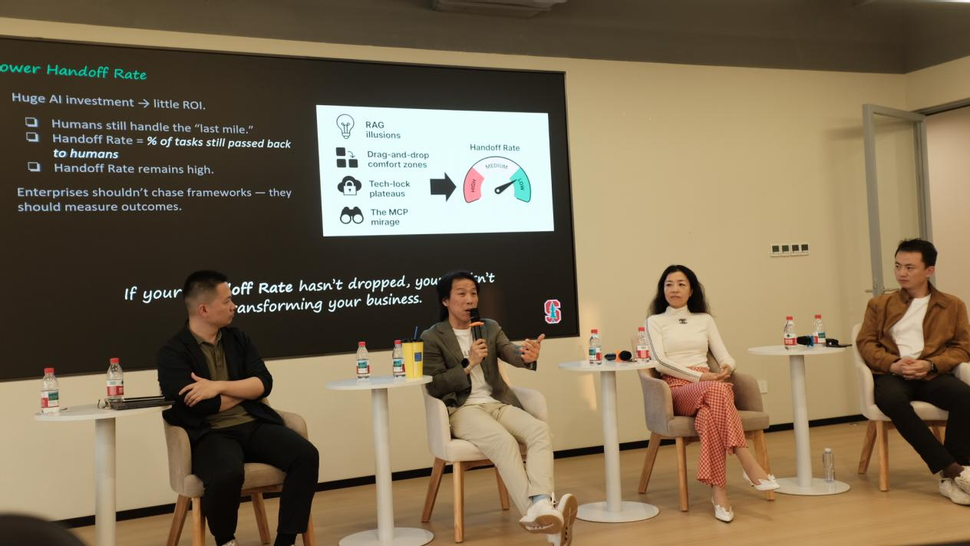
From left to right: Mr. Dongdong Wei, Mr. Weixiao Fan CC, Professor Yilei Shao, Mr. Ruiyang Xu
Dr. Junjie Li holds doctoral degrees in Economics and Law from Stanford University. He currently serves as Managing Director of Liva Information, Chair of Stanford Angels & Entrepreneurs China, and Vice President of Stanford Alumni Association Shanghai.
Mr. Weixiao Fan CC is CEO of Vivgrid-AI Infrastructure Infra and a director of the Linux Foundation Edge AI Foundation. As a serial entrepreneur, he has long focused on geo-distributed AI inference infrastructure.
Professor Yilei Shao is the founding Dean of Shanghai AI-Finance School (SAIFS), East China Normal University, Director of the UNU-ECNU Hub in AI-Finance, and holds a PhD in Computer Science from Princeton University.
Mr. Dongdong Wei is CTO of Shanghai Xuanwu Era AI Technology Co., Ltd., an entrepreneur focusing on enterprise large model application, and the author ofPractical RAG: Workflow to Enterprise-grade Agents.
Mr. Ruiyang Xu serves as CEO of NYX Ventures. He has participated in investments in Chinese and American tech companies including ByteDance, NIO, Mistral AI, Hugging Face and Genspark.
For detailed profiles of all guests, please refer to the event announcement of this lecture. The content summary of the lecture is presented below.
1. Evolution, Current Status and Future Prospects of AI Agents
Mr. Weixiao Fan CC cited viewpoints from Jensen Huang and noted that the core of OpenClaw’s success lies in the integration of large language models and tools. AI is increasingly integrated with the physical world. Compared with the response speed and usage cost of large language models, the capability to execute long-horizon tasks deserves greater attention. Statistics show that large language models double their capacity for long-duration task processing every seven months. Hardware will become a bottleneck restricting such capabilities in the future. The inference data exchange required for long-running tasks calls for upgrades to hardware architectures.

Mr. Weixiao Fan CC
Mr. Ruiyang Xu reviewed the evolution spanning AutoGPT, Manus, Genspark and OpenClaw from the perspectives of investment logic and user experience. He argued that the true dividing line within the industry lies in delivery capacity, cost structure and usability, rather than merely the advancement level of the models themselves. High-value Agents in the future will assist users in completing entire workflows, instead of only delivering fragmented capabilities.

Mr. Ruiyang Xu
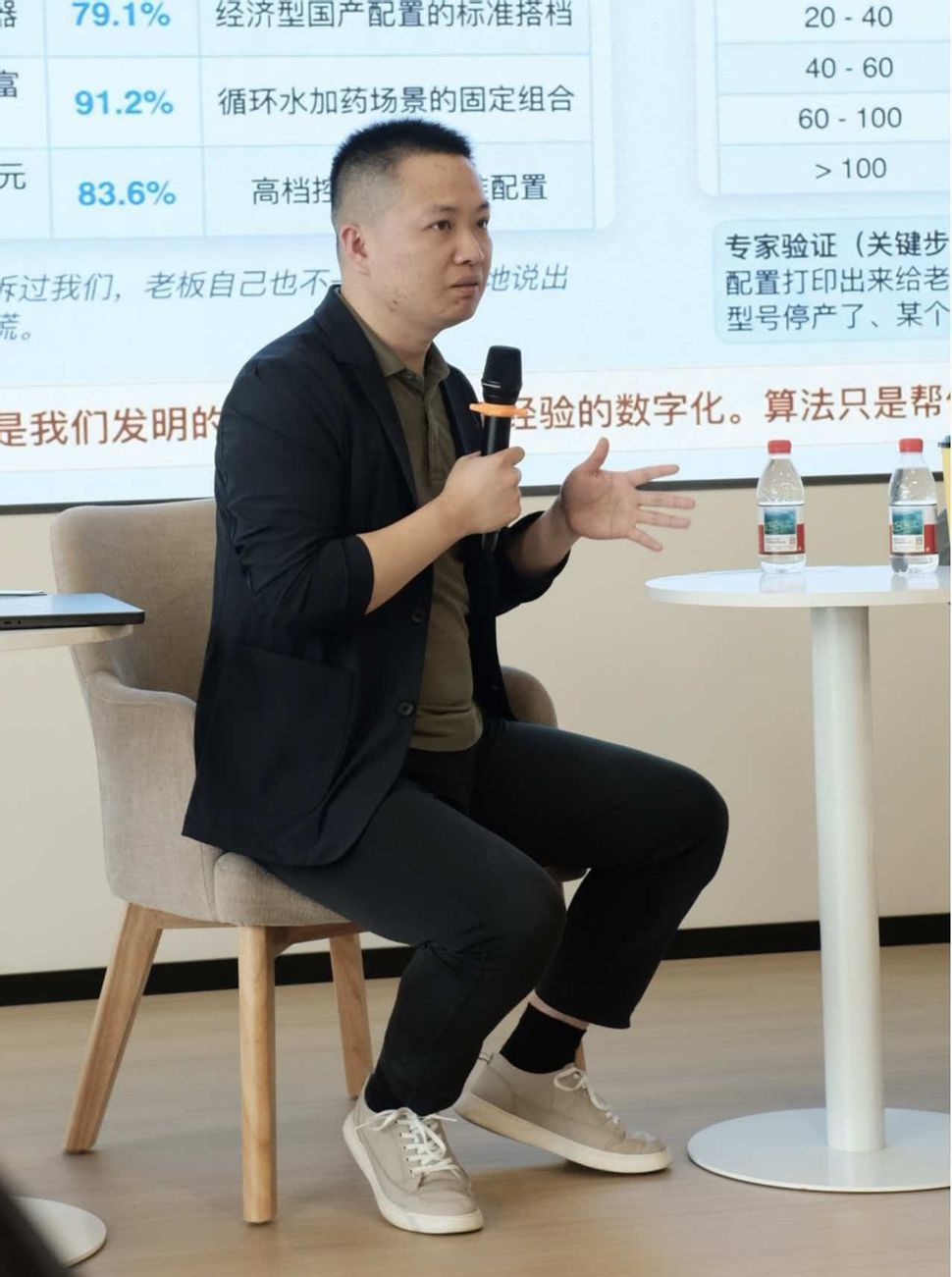
Mr. Dongdong Wei shared a quotation system built with Agents for a non-standard equipment manufacturer. The team conducted structural processing, cluster analysis and business rule extraction on more than 7,000 quotation sheets, finally converging on 20 standard templates and rule configurations. Verified by the client, 90% of the content proved accurate. The project digitally encapsulated the client’s decades of industrial experience with algorithms, greatly cutting down time spent on information retrieval and decision-making and boosting overall efficiency.
Mr. Weixiao Fan CC noted that enterprise-level deployment of OpenClaw addresses security risks via two approaches. First, system prompts block risky behaviors when OpenClaw connects to large language models. Second, administrators configure OpenClaw exoskeleton to mount enterprise-specific tools onto Agents. This enables operation either under Copilot mode or in the identity of a virtual employee within bounded secure access permissions.
From a macro perspective, Professor Yilei Shao argued that most users adopt overly conservative approaches to AI application and fail to unlock its full potential. AI is not merely meant to deliver marginal efficiency gains; instead, it ought to bring efficiency growth multiple times higher or even by orders of magnitude.

Professor Yilei Shao
Dr. Junjie Li also shared a copywriting generation system he recently developed, which relies on three coordinated Agents with multiple rounds of iteration. One Agent takes charge of writing, another points out flaws and puts forward critical feedback, and the third undertakes review work. Mechanisms are embedded in the system to ease the randomness of generative AI outputs, namely the "blind box effect" in each generation round, so as to improve iteration efficiency. He encouraged the audience to move beyond simple AI chatting and actively explore diverse ways to apply AI technologies.
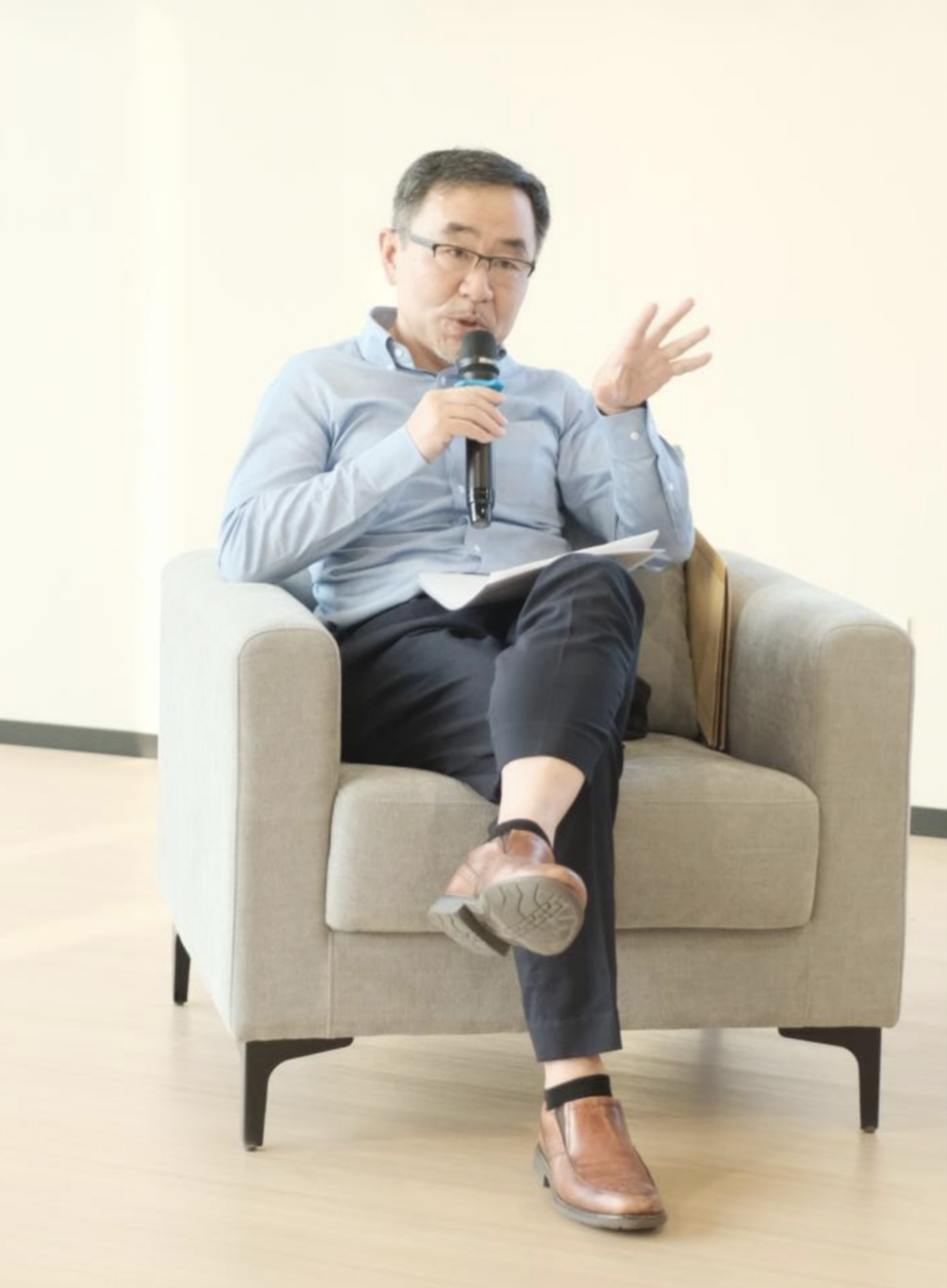
Dr. Junjie Li
3、Solopreneurship and Entrepreneurship Insights in the AI Era
Mr. Dongdong Wei shared a case of building an after-sales knowledge base for a leading industrial control software enterprise. The project entailed extensive document cleaning, knowledge integration and customer service consultation scenarios. It helped engineers boost response efficiency and cut costs caused by repetitive inquiries. Enterprises usually have highly targeted core demands for AI. What matters is not conceptual hype, but fast delivery, tangible results and sustainable value creation.
Mr. Weixiao Fan CC voiced optimism about two entrepreneurial tracks. The first category covers Agents that generate cash flow from Day One of operation. The second focuses on demands that remain valid amid continuous model evolution, including tool calling, multi-Agent collaboration, infrastructure governance and cross-system service capabilities.
Professor Yilei Shao pointed out that solopreneurship in the AI era essentially means one individual working alongside an array of AI tools. Emerging opportunities in the future are not confined to partial optimization within conventional corporate workflows. New growth can be tapped in brand-new service systems built for silicon-based agents, ranging from energy supplies and data centers to diverse foundational services tailored for Agents.
Mr. Ruiyang Xu pointed out that currently, AerCap (Bohai Leasing) ranks among listed companies with the highest profit per capita. Its profit per capita exceeds more than 5 million US dollars. Successful solopreneur companies are expected to achieve an annual profit per capita of over 100 million US dollars in the future.
4、Global Development Landscape and China-US Comparison
Professor Yilei Shao held that the United States focuses more on sophisticated cutting-edge models and frontier innovation capacity, while China excels in engineering implementation, supply chain advantages and cost performance, and boosts industrial rollout through abundant application scenarios. China and the United States show prominent divergences. Currently, only these two countries are capable of token generation and output, and global development will gradually converge toward this bipolar pattern.
Mr. Weixiao Fan CC shared differentiated strategic priorities for various markets. In European and American markets, the top priority is labor cost reduction, whereas scenario coverage takes precedence in the Chinese market.
Toward the end of the lecture, the guests responded to questions raised by the on-site audience, including solutions to the inability to access large language models caused by internet outages in regions such as Iran.

Q&A Session
The two-hour-plus lecture concluded quickly. Attendees were left wanting more and engaged in animated discussions with the host and all guest speakers after the formal session. Stanford Angels & Entrepreneurs China hosts events on a regular basis. The next event will be held in the near future. Stay tuned!
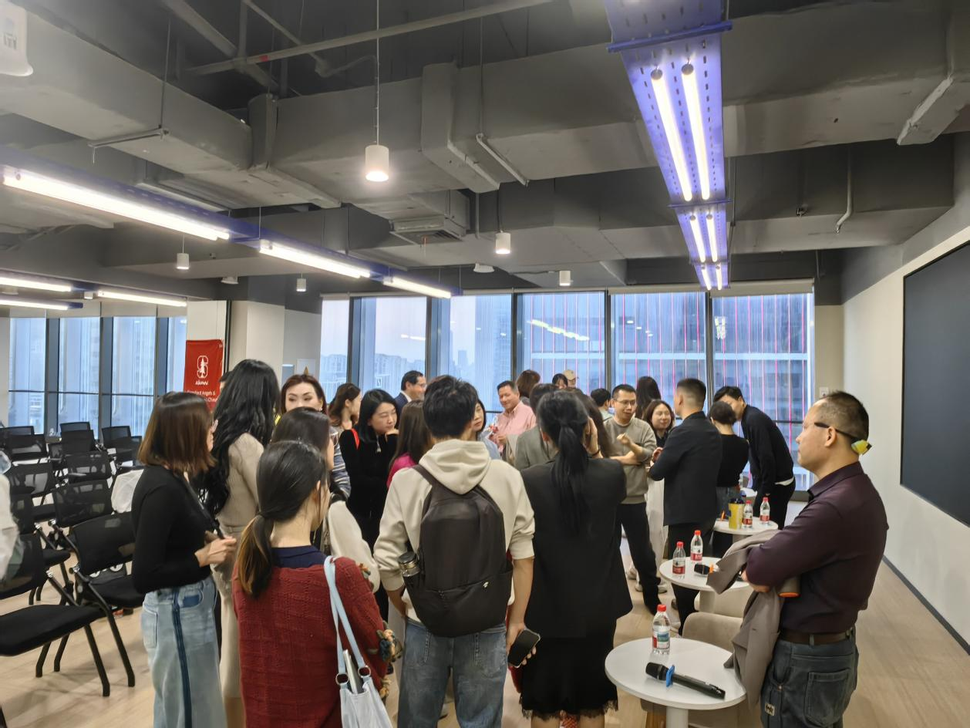
Post-event Exchange
Source:SAIFS,ECNU